Patrick Walker
Co-founder · Goodnight Midstream
Patrick Walker on investing, infrastructure, leadership, and why customer need matters more than an impressive product.
Watch the full conversation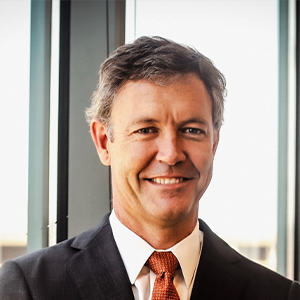 Career Cartography · Profile 05
Watch the full interview.
Patrick Walker's career moved from finance and management consulting into an operating business few people would call glamorous: oilfield wastewater infrastructure. That transition was the point. He and his partner found a costly, unavoidable customer problem in North Dakota and built Goodnight Midstream around solving it. Walker's reflections connect ownership, service, and leadership: listen to customers, explain the mission repeatedly, give people a stake in the outcome, and measure success by what the organization makes possible for employees as well as investors.
The moments that
shaped the path.
An investor's mindset
Growing up in Amarillo, Walker absorbed an ownership culture from his father and grandfather. At the University of Texas he combined Plan II with finance, then entered management consulting. The work sharpened his analytical skills, but it also taught him the limits of businesses where time is the only thing available to sell.
The unglamorous problem worth solving
After business school and years in investing, family circumstances pulled Walker back toward oil and gas. During the financial crisis, a North Dakota investment exposed an extraordinary wastewater bill and a shortage of infrastructure. Instead of starting with a technology, he and his partner started with that customer need and built the facilities, pipelines, and team required to address it.
Leadership is repeated communication
As Goodnight grew, Walker learned that leaders spend much of their time talking with people, clarifying what the company does, why it matters, and how each employee contributes. He is proudest not only of investor returns but of the savings employees accumulated, the safety record they maintained, and the livelihoods the business supported.
How the path unfolded.
The route becomes clearer in retrospect. These are the decisions, detours, and discoveries that moved the story forward.
- CollegeWaypoint
Plan II and finance at UT Austin
A longstanding interest in investing led Walker toward business and ownership.
- 1994–1997Waypoint
Management consulting
He worked from Dallas and South Africa, gaining analytical discipline through demanding, travel-heavy assignments.
- 1997–1999Waypoint
Stanford Graduate School of Business
Business school expanded his network and prepared him for entrepreneurial work.
- 2000sWaypoint
Investing and energy
He worked in startups and public investing, with a growing focus on oil and gas.
- 2009–2010Waypoint
Finds a wastewater bottleneck
An energy investment in North Dakota revealed the costly infrastructure problem that became Goodnight Midstream's opening.
- GoodnightWaypoint
Co-founds and scales the company
The business grew into a large operating team providing critical wastewater services.
- 2023–presentWaypoint
Returns to the field
After leaving Goodnight, Walker began developing a more technology-oriented venture in traditional oil and gas.
Five ideas worth keeping.
- 01
Beware survivorship bias: entrepreneurship can create ownership, but its risks are real and often invisible.
- 02
Customer-driven companies solve an existing, valuable problem; product-driven companies can perfect something nobody needs.
- 03
Leaders must repeatedly explain what the organization does, why it matters, and each person's role in it.
- 04
Spend real time with direct reports and leave room in the calendar for the problems that cannot be scheduled.
- 05
Do not copy another person's path simply because it worked for them; learn who you are and follow the work that fits.